Overview
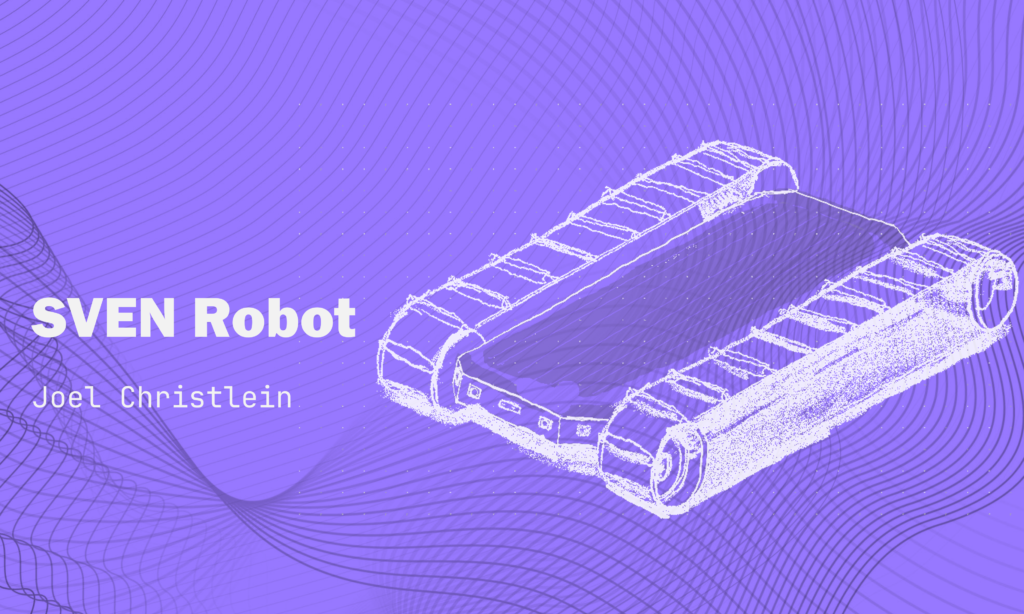
SVEN Robot (Solar-powered Versatile Exploration- and Navigation Robot) is a personal side-project aimed at developing a small DIY companion robot, using cheap off-the-shelf components and 3d-printed parts. To enable the robot to be charged using solar power, the energy consumption is reduced to a minimum. For this reason, the robot does not employ demanding sensors (LIDAR, cameras) or processors, relying on an ESP8266 microcontroller and laser TOF sensors for control and vision.
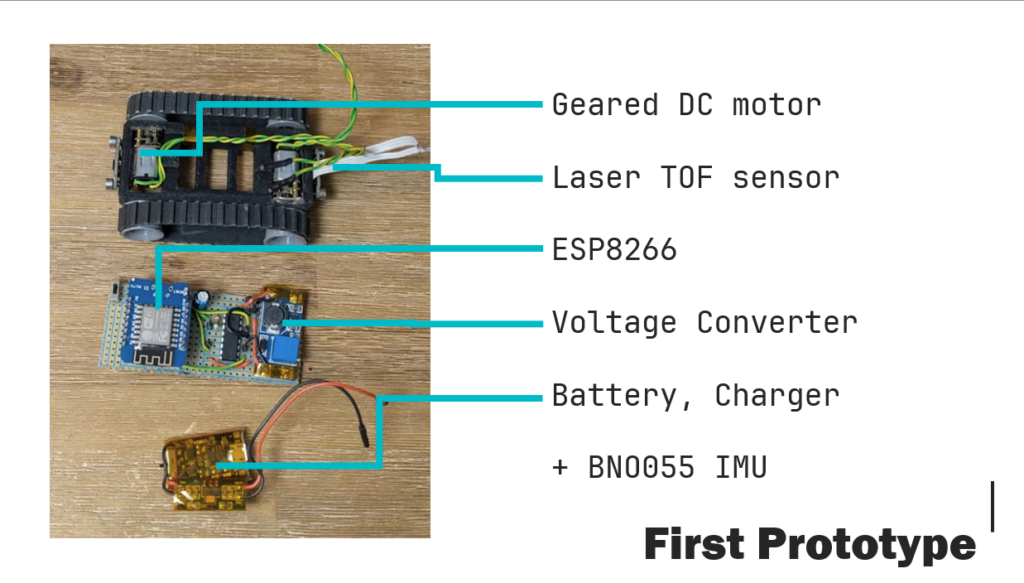
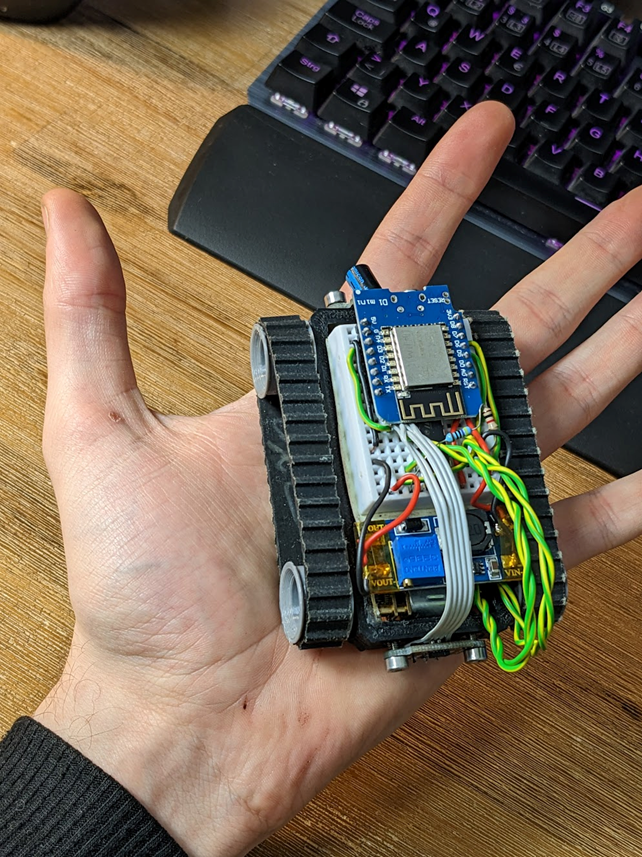
The prototype can be remote controlled, through WiFi. It connects automatically to a configured network, and accepts UDP packages. While the connection is active, it responds with updates about it’s state and sensor data.
Since there is no SLAM capability, the robot estimates it’s position from an absolute reference point, using IMU data.
ML Training
To give the robot very simple intelligence, a simulation environment was created in Unity, where TFlight models can be trained, that can be inferenced on the microcontroller. The goal is to improve path finding and position estimation, as well as energy management.
XR Control
To mitigate the limited capabilities of the robot, the extensive capabilities of current XR hardware can be leveraged. The Meta Quest 3 has remarkable inside-out tracking and depth sensors to map the environment. The camera-based hand-tracking is very reliable, enabling intuitive user interaction.
In the current prototype, the passthrough cameras are used to detect the robot through ARuco markers, which are transformed into the headset’s coordinate system, and sent to the robot as an absolute reference pose (position and orientation). Now you can use the environment mesh on the headset, to send the robot a map of the environment, and instruct it to drive towards a specific point in space.
A digital twin of the robot is placed at the location of the robot, and extrapolated based on linear velocity, acceleration and gyro data.
While the current control app is very barebones, it shows, how the extensive capabilities of XR hardware can be used to communicate effectively with very simple device and machines, without requiring every device to be overengineered and packed with a lot of expensive sensors.